

Every dental website says the same thing: take your child to the dentist by their first birthday. That’s genuinely good advice — but if your child is already 4, 6, or 9 and has never been, that advice can feel more guilt-inducing than useful. This guide covers both situations honestly: the ideal timeline, and what to actually do if you’re starting later than that.
Quick answer: The ideal first visit is within 6 months of the first tooth appearing, or by age 1. If your child is older and hasn’t been yet, that’s completely manageable — the approach just shifts slightly toward building comfort before diving into any treatment.
Jump to:
The Ideal First Visit Timing |
Starting Later Than Age 1 |
How to Prepare Your Child |
FAQs
The goal of an early visit isn’t treatment — it’s making sure a dental chair never becomes something to fear.
The Ideal First Visit Timing
Pediatric dental guidelines recommend a first visit within six months of the first tooth erupting, or by the child’s first birthday — whichever comes first. Most babies get their first tooth between 6 and 10 months, which puts the first visit somewhere around 9-12 months for most families.
This early visit is rarely about treatment. It’s a short, gentle check of oral development, a conversation with parents about brushing and feeding habits, and — just as importantly — a first neutral or positive association with a dental clinic before any actual problem exists.

If Your Child Is Older and Hasn’t Been Yet
This is more common than most parenting content admits. Life gets busy, the “right time” passes, and by the time a cavity or complaint brings a child in for the first time, they’re already old enough to have opinions — and often fears — about what a dentist visit might involve.
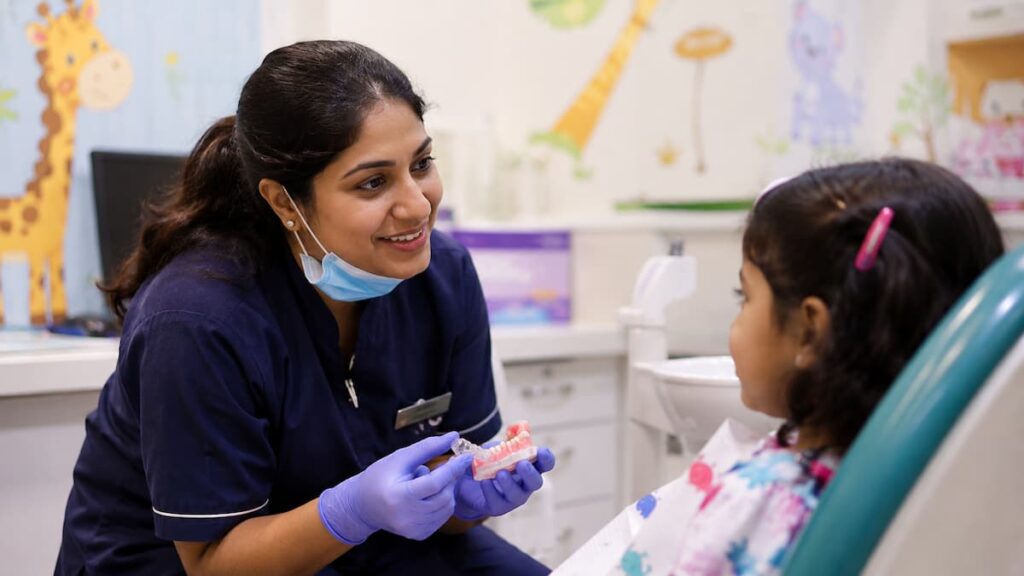
The approach here shifts: the first visit becomes about building trust before touching a single tooth if needed. A good pediatric dentist will spend time talking to the child directly, let them see and hold instruments beforehand, and often delay any actual treatment to a second visit once the child feels safe in the space. Rushing this step to “just get it done” tends to backfire and makes every future visit harder.
– A first visit that’s purely a look-and-talk, with no treatment, is not wasted time — it’s the foundation for every visit after.
– Bring older children in for a sibling’s routine checkup first, so the environment feels familiar before it’s their turn.
– Avoid using words like “pain,” “shot,” or “hurt” when talking about the visit beforehand — kids pick up on the anxiety in how it’s described.
– If a cavity needs treatment, ask whether a separate comfort-building visit can happen first before the procedure itself.
How to Prepare Your Child Either Way
Whether it’s a first visit at age 1 or a first visit at age 6, a few things genuinely help: keep the language neutral and simple (“the dentist counts your teeth” works better than a long explanation), avoid scheduling around nap time or right before a meal when kids are naturally more irritable, and resist the urge to bribe heavily beforehand — it can unintentionally signal that something worth bribing over is about to happen.
At Elysian Dental Care, Dr. Kiranmayi, our pedodontist, structures every child’s first visit around comfort first — using a calm, unhurried pace and letting the child’s reaction guide how quickly to move, rather than working through a fixed checklist regardless of how the child is responding.
According to the American Academy of Pediatric Dentistry’s guidance for parents, early and positive dental experiences are strongly linked to lower dental anxiety later in life — reinforcing that how a first visit feels often matters more than exactly when it happens.
Frequently Asked Questions
When should my child first visit a dentist? Within 6 months of the first tooth appearing, or by their first birthday — whichever comes first.
My child is already older and hasn’t been to a dentist yet — is that a problem? It’s very manageable. The visit simply focuses more on building comfort and trust before any treatment, rather than assuming the child is ready to jump straight in.
What happens during a child’s first dental visit? A gentle look at oral development, a conversation with parents about brushing and habits, and often no treatment at all — the goal is comfort, not procedures.
How often should children see a dentist after the first visit? Generally every six months, though your pediatric dentist may adjust this based on your child’s specific oral health.

Whether your child is due for their very first visit or it’s simply been a while, a calm first step is easier than most parents expect. Contact Elysian Dental Care in Kondapur, or learn more about our pediatric dentistry services.
Call +91 93817 58514 | Open Mon–Sun, 9 AM – 9 PM