

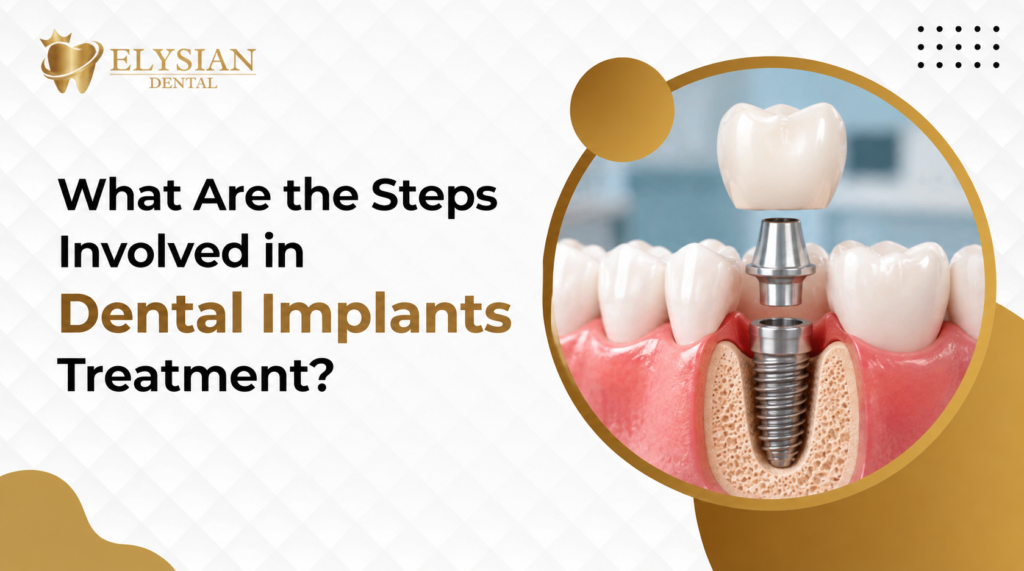
Missing teeth can make you feel shy when you smile. You might start avoiding foods because of the way you look or feel. But you are not alone-many people deal with this every day. Getting your smile back should be simple, safe and easy. That is why Dental Implants Treatment is a choice for replacing lost teeth. A small titanium post is placed into your jawbone to act as a root. Then a custom crown is attached on top. It works just like a real tooth. What exactly happens during the process? How many visits do you need? This easy guide walks you through each step so you can go into the clinic without fear.
Why Choose Dental Implants Treatment Over Regular Bridges?
The whole process of Dental Implants Treatment takes place through distinct steps to ensure your safety and comfort. The entire step-by-step process has been elaborated below in very simple language.
- Jawbone Protection: Natural tooth roots keep the jawbone active and strong. When a tooth falls out, the bone begins to shrink. An implant acts like a root and stops this shrinkage.
- Protection of Adjacent Teeth: Bridges require healthy teeth to be filed down for support. Implants stand alone. Do not harm the teeth beside them.
- Long-Term Durability: A bridge often needs a replacement after seven to ten years. A well-cared implant can last for the rest of your life.
- Natural Chewing Power: Implants bring back nearly 95% of your normal biting strength. Dentures return only about 20% to 30% of that force.
What Are the Complete Steps in Dental Implants Treatment?
The full journey of Dental Implants Treatment happens in clear stages to keep you safe and comfortable. Here is the complete step-by-step process, explained in very simple words.
Step 1: Initial Consultation and 3D Imaging
Your journey starts with a careful check of your mouth and teeth. Doctors use digital 3D CBCT scans to study jaw strength, nerves, and sinus position. They also read your medical history to understand your health needs. Then they build a custom plan that fits your jaw shape.
Step 2: Preparing the Jaw and Bone Grafting
Sometimes the jaw is too thin or soft to hold a firm post. In that case, a small grafting procedure adds fresh bone material to the weak area. This Dental Implants Treatment step builds a solid base that supports the titanium post for years.
Step 3: Surgical Placement of the Titanium Post
An oral surgeon screws in a medically manufactured titanium implant into your jaw using local anaesthesia. The current techniques have made this procedure almost pain-free for people today. A healing cap is fitted into the implant site to enable the gums to heal properly.
Step 4: The Osseointegration Phase
Over the next three to six months, a natural process called osseointegration begins. Nearby bone cells grow around the post and hold it very tightly. This creates a permanent artificial root that feels like part of your jaw. You can wear a temporary crown while your mouth heals.
Step 5: Fixing the Abutment Connector
Once the post is fully fused, the surgeon opens the gum over its top. A small connector called an abutment is then attached under local numbing. Your gum heals around it for one to two weeks and forms a natural shape.
Step 6: Taking Digital Impressions for Your Custom Crown
Once the gums have healed, a digital scanning device takes an exact impression of your teeth. The process is simple and clean – there are no unpleasant pastes involved. Your technicians will use these scans to design your custom crown, which will even match your existing teeth in colour and size.
Step 7: Placing the Permanent Crown
In the final stage, your doctor fixes the permanent crown onto the abutment firmly. This completes your Dental Implants Treatment and brings back your bite and chewing power. The visit is quick and smooth, and you can go home the same day. You can now smile, talk, and eat your favourite meals with full confidence.
What Overview Covers the Complete Healing Timeline?
This quick table shows each phase, its timing, and the final result.
| Stage | Key Focus Area | Healing Time | Main Outcome |
| Phase 1 | Post-Placement Surgery | 3 to 6 Months | Bone Integration (Osseointegration) |
| Phase 2 | Abutment Attachment | 1 to 2 Weeks | Tissue Shaping and Connector Placement |
| Phase 3 | Final Crown Fitting | Ongoing Maintenance | Complete Tooth Restoration |
How Do You Maintain Your Dental Implants Treatment Results?
Keeping your tooth healthy is simple and only requires easy habits. Small things you do every day help protect your investment.
- Brush Twice Daily: Use a toothbrush with gentle toothpaste every morning and every night.
- Floss Daily: Use implant floss or a water flosser to clean around the abutment.
- Avoid Objects: Do not bite ice, hard candy or plastic packets with your teeth.
- Schedule Regular Cleanings: Go to your dentist twice a year for checks and professional cleaning.
What Factors Influence Success in Dental Implants Treatment?
- Specialist Expertise: Care from MDS Endodontists and skilled Oral Surgeons leads to the results.
- Hygiene Standards: Careful sterilisation at the clinic keeps the area safe from infection.
- Strict Avoidance of Tobacco: Smoking slows bone healing. Raises the chance of failure.
- Overall Health Control: Stable blood sugar levels help the bone fuse, with the post.
Conclusion
Dental Implants Treatment is a smart choice for your oral health. The process has a few clear steps. It starts with a 3D scan. It ends with a new crown. Each step keeps you safe and at ease. Every stage helps your new tooth look and work like a real one. Healing may take some time. But the result is worth it. Good doctors, a clean clinic, and proper care at home can make your implant last for years. If you have a missing tooth, book a visit today. Take the first step toward a happy smile.
Follow Elysian Dental on Facebook and Instagram for dental care tips, treatment updates, and healthy smile inspiration.
Frequently Asked Questions
1. Is dental implant surgery very painful?
No, it will not hurt. The dentist numbs the area first. You may feel some pressure during the surgery. After the surgery, there may be mild pain. Medicine can help with this.
2. How long will a dental implant last?
With good care and regular check-ups, the titanium post can last a lifetime. The crown on top often lasts 15 to 20 years. After that, it may need a change.
3. Is a dental implant good or bad?
A dental implant is a strong, long-term fix for a missing tooth. It keeps your jaw healthy. It also protects the teeth next to it. It helps you chew well again. Dental Implants Treatment gives you a safe and natural-looking tooth.
4. Which age is best for dental implants?
Any adult with a fully grown jaw can get an implant. This usually means age 18 or above. There is no upper age limit. You just need good health and enough jawbone strength.
5. What is the newest procedure for dental implants?
The newest method is 3D-guided digital Dental Implants Treatment. Many modern clinics use this now. Dentists use CBCT scans and digital impressions to place the post with great care. This method makes surgery faster. It also speeds up healing. The final crown fits better too.